27 February 1511
Research Group
On 27 February, 1511, in what is now the region of Friuli Venezia Giulia, one of the largest and most violent revolts of Renaissance Italy occurred during the Carnival celebrations of Fat Thursday.Long remembered as Cruel Fat Thursday (Crudêl joibe grasse in Fruilian, or Crudel zobia grassa in Italian), the Carnival transformed from an annual ritual of joyful mockery and symbolic reversals to one of unprecedented vendetta violence of warring elite factions that ignited a popular and peasant insurrection.
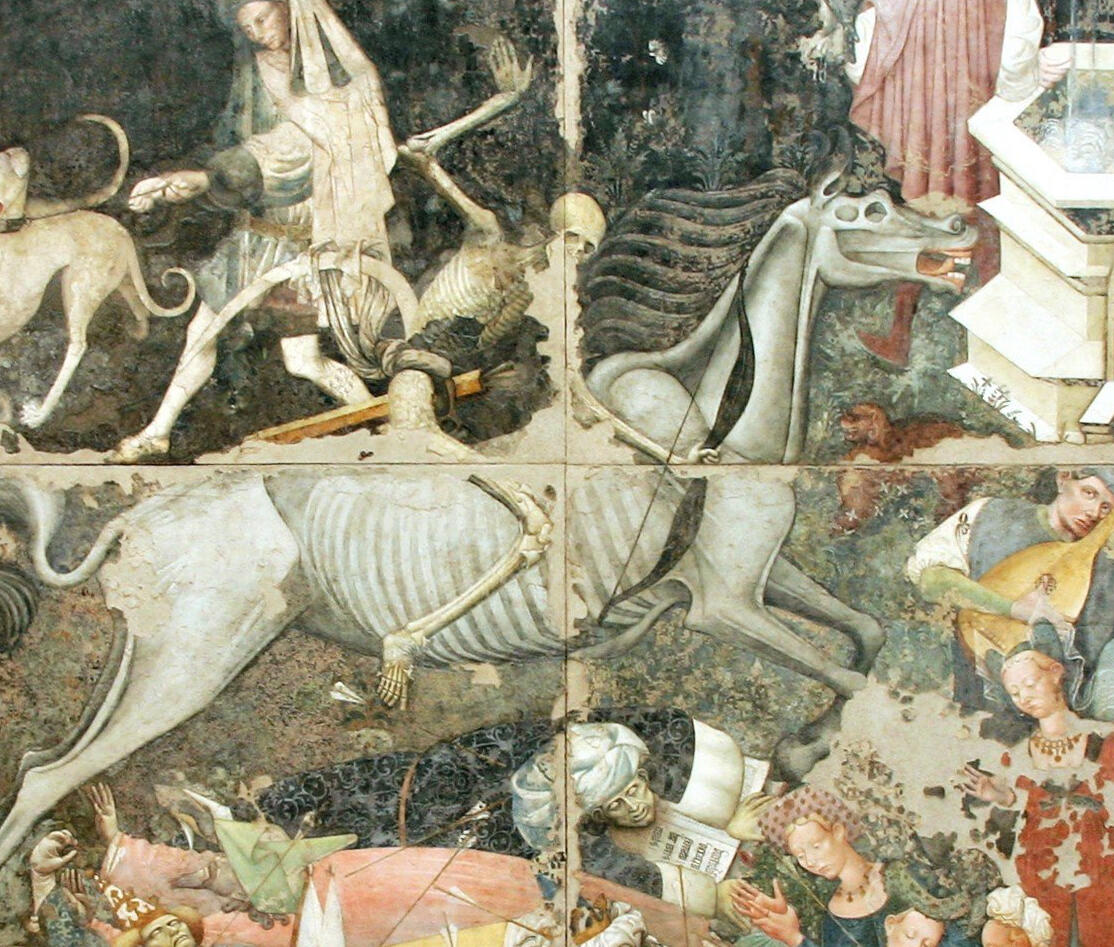
The 27th February 1511 Research Group is built out of the close reading of Edward Muir’s, Mad Blood Stirring: Vendetta and Factions in Friuli during the Renaissance, a powerful microhistorical analysis of the largest peasant revolt of Renaissance Italy. Our team is currently developing speculative agent-based models (ABMs) of these aggressions in order to study emergent group behaviours focusing on the quality of communications between in-group and out-group subjects, the spread of revolting sentiment, and variations of carnival inversions of social hierarchies.Once the representation of a set of psychosocial simulations of these 16th century Northeastern Italy civil aggressions are complete, we will create a richly historical game environment centered on the actual events, medieval participants, and social dynamics of February 27th, 1511.Why Agent Based Modeling (ABM)? The research group has chosen to begin with the application of agent-based modelling (ABM) to study this fascinating and significant historical moment. ABM offers a modelling architecture that is typically used to study diversified agent behaviours and generalise insights into different forms of group processes.The 27th February 1511 Research Group is now developing a computational modelling methodology that combines the bottom-up emergence of group behaviours in ABMs and the bottom-up accumulative narrative thrust of microhistorical analysis; with future considerations including the representation of this models and the emergence of agent behaviours within a game environment. We hypothesise that there is something idiosyncratic to the events of February 1511: it is found in the combination of humour, mocking, militaristic training, and violence of this fateful carnival.
Colleagues and associates
Edward Muir
James Baillie
Francesca Bartoletti
Patricia Fortini Brown
Vinicius Marina Carvahlo
Umberto Cecchinato
Robert Houghton
Jeremiah McCall
Markus Hildegard Mendrebø
Select bibliography
Bianco, Furio. 1511: The "Cruel Fat Zobia": Peasant Revolts and Noble Feuds in Friuli between the 15th and 16th Centuries. Vol. 4. Menocchio Historical Studies Center, 1995.
Bianco, Furio. “Mihi Vindictam: Aristocratic Clans and Rural Communities in a Feud in Friuli in the Late Fifteenth and Early Sixteenth Centuries.” In Crime, Society and the Law in Renaissance Italy, edited by Trevor Dean and Kate J. P. Lowe, 249–274. Cambridge: Cambridge University Press, 1994.
Madden, Amanda. “Menocchio Mapped: Italian Microhistory and the Digital Spatial Turn.” In Zoomland: Exploring Scale in Digital History and Humanities, edited by Florentina Armaselu and Andreas Fickers, 77–96. Berlin and Boston: De Gruyter Oldenbourg, 2024.
Mindrebø, Markus Eldgard. “Simulating Medieval Connections: Grand Strategy Games and Social Network Analysis.” Journal of Historical Network Research 10 (2024): 92–121. https://jhnr.net/articles/81/files/660bbe5c7c0b0.pdf.
Muir, Edward. Mad Blood Stirring: Vendetta and Factions in Friuli during the Renaissance. Baltimore: Johns Hopkins University Press, 1993.